 Add to Chrome
 Add to Firefox
 Add to Edge
Regularized Large Neighborhood Search
Jun 01, 2026
Operations research practitioners typically tackle NP-hard combinatorial problems using large neighborhood search (LNS), a scalable heuristic that iteratively refines a current solution by locally re-optimizing subsets of its variables. In contrast, most existing approaches for integrating combinatorial optimization layers into neural networks still assume access to an exact global solution, which is computationally intractable. We bridge this gap by introducing regularized LNS (RLNS). By regularizing or perturbing local subproblems, we turn the LNS heuristic into an efficient MCMC sampler over the combinatorial set of feasible solutions, with associated Fenchel-Young losses. Under entropic regularization, we prove that RLNS performs exact block Gibbs sampling. Furthermore, adjusting the number of RLNS iterations allows us to interpolate between pseudolikelihood and exact maximum likelihood estimation, for end-to-end learning without global solvers. We demonstrate our approach on $k$-subset selection, generalized assignment, and stochastic vehicle scheduling problems.

Differentiable Knapsack and Top-k Operators via Dynamic Programming
Jan 29, 2026Knapsack and Top-k operators are useful for selecting discrete subsets of variables. However, their integration into neural networks is challenging as they are piecewise constant, yielding gradients that are zero almost everywhere. In this paper, we propose a unified framework casting these operators as dynamic programs, and derive differentiable relaxations by smoothing the underlying recursions. On the algorithmic side, we develop efficient parallel algorithms supporting both deterministic and stochastic forward passes, and vector-Jacobian products for the backward pass. On the theoretical side, we prove that Shannon entropy is the unique regularization choice yielding permutation-equivariant operators, and characterize regularizers inducing sparse selections. Finally, on the experimental side, we demonstrate our framework on a decision-focused learning benchmark, a constrained dynamic assortment RL problem, and an extension of discrete VAEs.
Combinatorial Optimization Augmented Machine Learning
Jan 15, 2026Combinatorial optimization augmented machine learning (COAML) has recently emerged as a powerful paradigm for integrating predictive models with combinatorial decision-making. By embedding combinatorial optimization oracles into learning pipelines, COAML enables the construction of policies that are both data-driven and feasibility-preserving, bridging the traditions of machine learning, operations research, and stochastic optimization. This paper provides a comprehensive overview of the state of the art in COAML. We introduce a unifying framework for COAML pipelines, describe their methodological building blocks, and formalize their connection to empirical cost minimization. We then develop a taxonomy of problem settings based on the form of uncertainty and decision structure. Using this taxonomy, we review algorithmic approaches for static and dynamic problems, survey applications across domains such as scheduling, vehicle routing, stochastic programming, and reinforcement learning, and synthesize methodological contributions in terms of empirical cost minimization, imitation learning, and reinforcement learning. Finally, we identify key research frontiers. This survey aims to serve both as a tutorial introduction to the field and as a roadmap for future research at the interface of combinatorial optimization and machine learning.
Learning with Local Search MCMC Layers
May 20, 2025Integrating combinatorial optimization layers into neural networks has recently attracted significant research interest. However, many existing approaches lack theoretical guarantees or fail to perform adequately when relying on inexact solvers. This is a critical limitation, as many operations research problems are NP-hard, often necessitating the use of neighborhood-based local search heuristics. These heuristics iteratively generate and evaluate candidate solutions based on an acceptance rule. In this paper, we introduce a theoretically-principled approach for learning with such inexact combinatorial solvers. Inspired by the connection between simulated annealing and Metropolis-Hastings, we propose to transform problem-specific neighborhood systems used in local search heuristics into proposal distributions, implementing MCMC on the combinatorial space of feasible solutions. This allows us to construct differentiable combinatorial layers and associated loss functions. Replacing an exact solver by a local search strongly reduces the computational burden of learning on many applications. We demonstrate our approach on a large-scale dynamic vehicle routing problem with time windows.
Primal-dual algorithm for contextual stochastic combinatorial optimization
May 07, 2025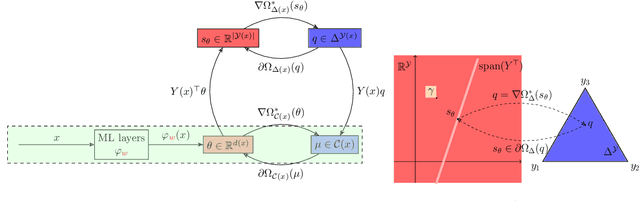

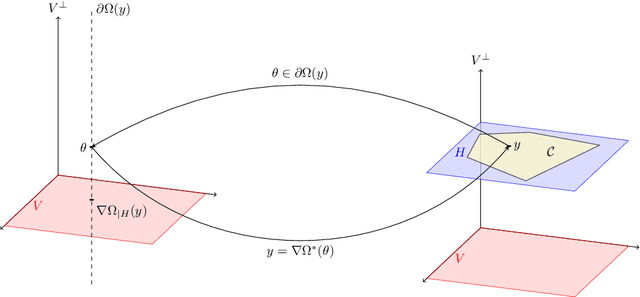
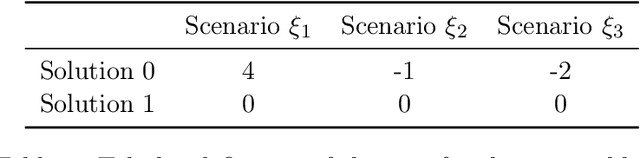
This paper introduces a novel approach to contextual stochastic optimization, integrating operations research and machine learning to address decision-making under uncertainty. Traditional methods often fail to leverage contextual information, which underscores the necessity for new algorithms. In this study, we utilize neural networks with combinatorial optimization layers to encode policies. Our goal is to minimize the empirical risk, which is estimated from past data on uncertain parameters and contexts. To that end, we present a surrogate learning problem and a generic primal-dual algorithm that is applicable to various combinatorial settings in stochastic optimization. Our approach extends classic Fenchel-Young loss results and introduces a new regularization method using sparse perturbations on the distribution simplex. This allows for tractable updates in the original space and can accommodate diverse objective functions. We demonstrate the linear convergence of our algorithm under certain conditions and provide a bound on the non-optimality of the resulting policy in terms of the empirical risk. Experiments on a contextual stochastic minimum weight spanning tree problem show that our algorithm is efficient and scalable, achieving performance comparable to imitation learning of solutions computed using an expensive Lagrangian-based heuristic.
Preference-aware compensation policies for crowdsourced on-demand services
Feb 07, 2025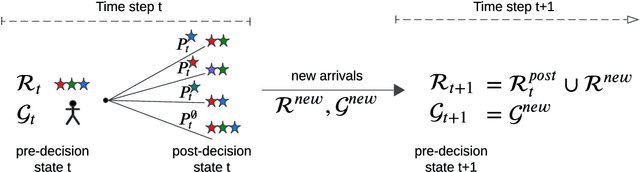
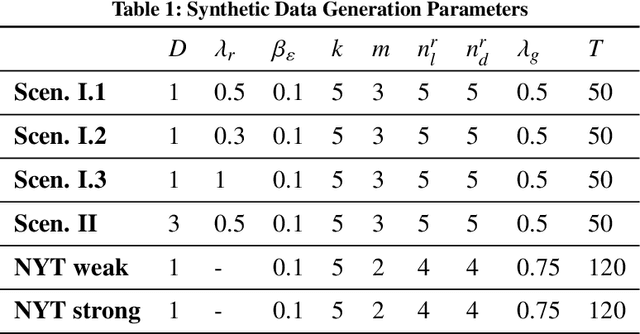

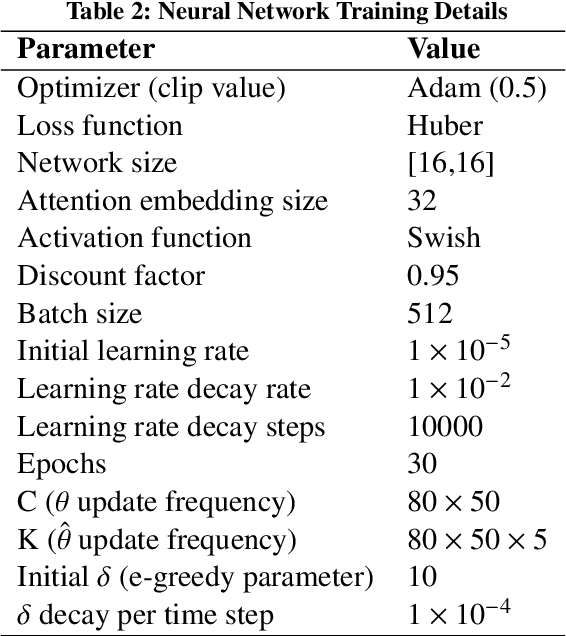
Crowdsourced on-demand services offer benefits such as reduced costs, faster service fulfillment times, greater adaptability, and contributions to sustainable urban transportation in on-demand delivery contexts. However, the success of an on-demand platform that utilizes crowdsourcing relies on finding a compensation policy that strikes a balance between creating attractive offers for gig workers and ensuring profitability. In this work, we examine a dynamic pricing problem for an on-demand platform that sets request-specific compensation of gig workers in a discrete-time framework, where requests and workers arrive stochastically. The operator's goal is to determine a compensation policy that maximizes the total expected reward over the time horizon. Our approach introduces compensation strategies that explicitly account for gig worker request preferences. To achieve this, we employ the Multinomial Logit model to represent the acceptance probabilities of gig workers, and, as a result, derive an analytical solution that utilizes post-decision states. Subsequently, we integrate this solution into an approximate dynamic programming algorithm. We compare our algorithm against benchmark algorithms, including formula-based policies and an upper bound provided by the full information linear programming solution. Our algorithm demonstrates consistent performance across diverse settings, achieving improvements of at least 2.5-7.5% in homogeneous gig worker populations and 9% in heterogeneous populations over benchmarks, based on fully synthetic data. For real-world data, it surpasses benchmarks by 8% in weak and 20% in strong location preference scenarios.
DistrictNet: Decision-aware learning for geographical districting
Dec 11, 2024Districting is a complex combinatorial problem that consists in partitioning a geographical area into small districts. In logistics, it is a major strategic decision determining operating costs for several years. Solving districting problems using traditional methods is intractable even for small geographical areas and existing heuristics often provide sub-optimal results. We present a structured learning approach to find high-quality solutions to real-world districting problems in a few minutes. It is based on integrating a combinatorial optimization layer, the capacitated minimum spanning tree problem, into a graph neural network architecture. To train this pipeline in a decision-aware fashion, we show how to construct target solutions embedded in a suitable space and learn from target solutions. Experiments show that our approach outperforms existing methods as it can significantly reduce costs on real-world cities.
WardropNet: Traffic Flow Predictions via Equilibrium-Augmented Learning
Oct 09, 2024
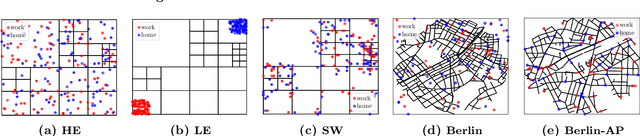
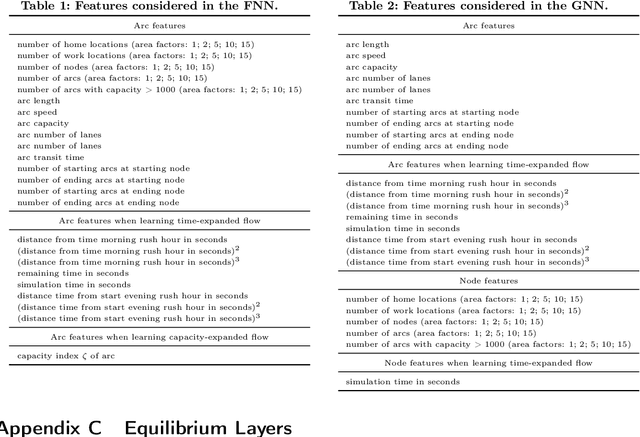

When optimizing transportation systems, anticipating traffic flows is a central element. Yet, computing such traffic equilibria remains computationally expensive. Against this background, we introduce a novel combinatorial optimization augmented neural network architecture that allows for fast and accurate traffic flow predictions. We propose WardropNet, a neural network that combines classical layers with a subsequent equilibrium layer: the first ones inform the latter by predicting the parameterization of the equilibrium problem's latency functions. Using supervised learning we minimize the difference between the actual traffic flow and the predicted output. We show how to leverage a Bregman divergence fitting the geometry of the equilibria, which allows for end-to-end learning. WardropNet outperforms pure learning-based approaches in predicting traffic equilibria for realistic and stylized traffic scenarios. On realistic scenarios, WardropNet improves on average for time-invariant predictions by up to 72% and for time-variant predictions by up to 23% over pure learning-based approaches.
Generalization Bounds of Surrogate Policies for Combinatorial Optimization Problems
Jul 24, 2024
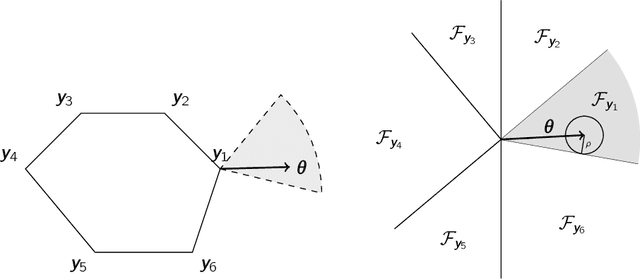
A recent stream of structured learning approaches has improved the practical state of the art for a range of combinatorial optimization problems with complex objectives encountered in operations research. Such approaches train policies that chain a statistical model with a surrogate combinatorial optimization oracle to map any instance of the problem to a feasible solution. The key idea is to exploit the statistical distribution over instances instead of dealing with instances separately. However learning such policies by risk minimization is challenging because the empirical risk is piecewise constant in the parameters, and few theoretical guarantees have been provided so far. In this article, we investigate methods that smooth the risk by perturbing the policy, which eases optimization and improves generalization. Our main contribution is a generalization bound that controls the perturbation bias, the statistical learning error, and the optimization error. Our analysis relies on the introduction of a uniform weak property, which captures and quantifies the interplay of the statistical model and the surrogate combinatorial optimization oracle. This property holds under mild assumptions on the statistical model, the surrogate optimization, and the instance data distribution. We illustrate the result on a range of applications such as stochastic vehicle scheduling. In particular, such policies are relevant for contextual stochastic optimization and our results cover this case.
CF-OPT: Counterfactual Explanations for Structured Prediction
May 28, 2024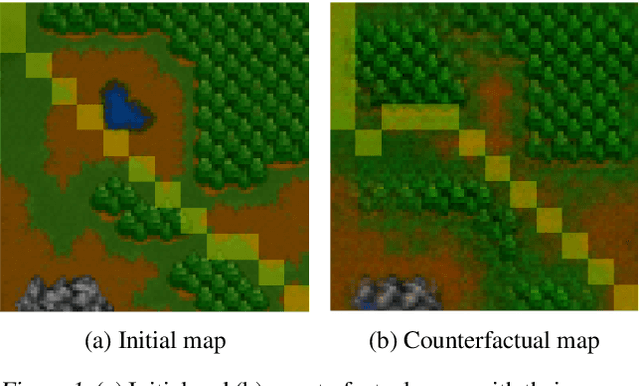


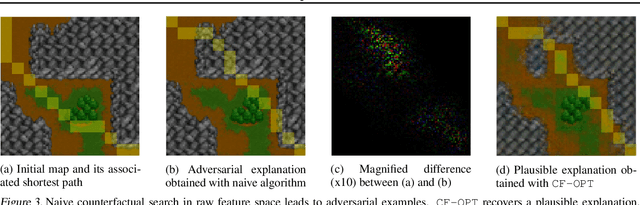
Optimization layers in deep neural networks have enjoyed a growing popularity in structured learning, improving the state of the art on a variety of applications. Yet, these pipelines lack interpretability since they are made of two opaque layers: a highly non-linear prediction model, such as a deep neural network, and an optimization layer, which is typically a complex black-box solver. Our goal is to improve the transparency of such methods by providing counterfactual explanations. We build upon variational autoencoders a principled way of obtaining counterfactuals: working in the latent space leads to a natural notion of plausibility of explanations. We finally introduce a variant of the classic loss for VAE training that improves their performance in our specific structured context. These provide the foundations of CF-OPT, a first-order optimization algorithm that can find counterfactual explanations for a broad class of structured learning architectures. Our numerical results show that both close and plausible explanations can be obtained for problems from the recent literature.